

BUILD COMMUNITY
Welcoming others and serving together in love
GROW DISCIPLES
Equipping believers to deepen their faith and make disciples.
MAKE AN IMPACT
Reaching our community and beyond with the gospel of Jesus Christ
OUR MISSION
Disciples Creating Disciples
This family's mission is to make disciples, who then make disciples, who in turn transform the world for Christ to glorify God and love our neighbors.
And Jesus came and said to them, "All authority in heaven and on earth has been given to me. Go therefore and make disciples of all nations, baptizing them in the name of the Father and of the Son and of the Holy Spirit teaching them to observe all that I have commanded you. And behold, I am with you always, to the end of the age.
Matthew 28:18-20 (ESV)
WHY BUILD?
God has richly blessed our church with steady growth. While we have expanded and adapted our existing facilities over the years, we have now reached the practical limits of our current campus.
A new facility will allow us to:
Provide room for continued growth as our congregation and community expand.
Replace aging and temporary classroom spaces with modern, purpose-built facilities. Create a unified campus that better serves children, students, adults, and families.
Equip disciples to make disciples by providing spaces for worship, Bible study, fellowship, and ministry.
Prepare for the future as our community is projected to grow to more than 30,000 residents by 2030.
A LETTER FROM THE ELDERS
Dear Church Family,
As shepherds of the Van Alstyne Church of Christ, we approach our heavenly Father with deep gratitude for His enduring grace and guidance in our congregation. Through much prayerful consideration and humble hearts, we have reached unanimous agreement to initiate a capital campaign to construct two new buildings alongside our existing worship facility. Our current building has served as a cherished home for many years, but God is opening new doors for our church family to grow. We recognize that this endeavor is not about erecting structures for our own pride, but about providing the space necessary to advance His kingdom, faithfully ministering to His flock, and glorifying His name in all we do.
Our God has called us as His beloved children to be a light to Van Alstyne, and this vision is rooted deeply in our commitment to discipleship. To prepare our hearts for this season, we invite everyone to participate in our upcoming 40 Days of Prayer to re-center our thoughts and purpose on Him, as well as our discipling classes designed to mature our faith. A new facility will expand our capacity to make disciples, nurture believers, and extend active, loving outreach into our surrounding community. We ask each of you to join us in prayerful alignment with His will as we embark on this journey together, trusting Him to use our willing hearts to reach the lost and serve our neighbors for His eternal glory.
Blessings to you and may God bless us in our efforts to proclaim Him among the nations!
The Elders,
Van Alstyne Church of Christ
NEW BUILDING PLANS

Three phases. One vision. Generations of impact
1
PHASE 1:
Education Center

New 15,800 sq-ft classroom and administration building with dedicated student ministry space, classrooms for every generation, expanded ministry offices, and a childcare center serving more than 140 children, giving us great outreach opportunity into families in our community with kids.
2
PHASE 2:
Worship Center & Foyer

New enlarged worship center that will accommodate approximately 400 worshipers connected to the Education Center with a 25ft-wide foyer/gathering area in-between, to better accommodate fellowshipping before and after class and worship.
3
PHASE 3:
Fellowship Hall & Parking
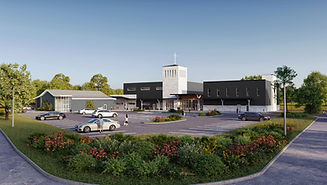
After moving into the Phase 2 worship center, we will be able to renovate our current building to serve a plethora of community needs and congregational fellowship while also expanding improved parking spaces across the remainder of our property
HOW YOU CAN PARTICIPATE
This campaign is a faith journey and is unique to each person.
PRAY
-
Seek God's guidance and wisdom on what He desires from you.
-
Pray each of the 40 Days of Prayer using the Prayer Devotional booklet.
-
Participate for one hour in the 24 hours of prayer vigil.
-
Periodically fast as you seek God’s guidance.
INVOLVEMENT
Complete the Survey and assist with one or more of the campaign teams.
FAMILY
Spend time as a family discussing and praying. Support your children and teens in the activities and classes designed for them.
CLASSES
Attend the special adult and teen classes on:
-
September 20, 2026
-
September 27, 2026
-
October 4, 2026
-
October 11, 2026
GIVE
Prayerfully consider your financial commitment.
CAMPAIGN TIMELINE
LAUNCH SUNDAY
September 13, 2026
TEEN GARAGE SALE
October 3, 2026
COMMITMENT SUNDAY
October 25, 2026
CELEBRATION
November 1, 2026
CONSTRUCTION START
Winter 2027
MOVE-IN
Q1 2029
FINANCIAL PLANS

53%
31%
16%
TOTAL PHASE 1 COST
$6,400,000
CAMPAIGN GOAL
$2,000,000
BUILDING FUND
$1,000,000
Campaign Goal
Current Building Fund
Expected Loan
FREQUENTLY ASKED QUESTIONS
Why do we need a capital campaign? Van Alstyne and surrounding areas are expected to grow tremendously in the next decade. We have an unprecedented opportunity to reach individuals with the hope of Christ, and as ambassadors for God’s Kingdom, we are expected to respond to that growth. Our mission has never been about a building where we just “do church”. The command from our Father is to tell the good news of Jesus and make disciples. We believe our campus is an important tool to fulfill our mission. Our current campus is outdated and no longer able to effectively provide the services needed to teach our children, teens and adults and doesn’t have the capacity to expand to community outreach. This campaign is intended to take each of us on a faith journey and raise enough funds to build a large Education and Administration building that can be used for many purposes such as classrooms for all ages, office space for staff, a meeting place and a daycare.
Since the purpose of the campaign is to raise money for the building project, will we continue to have 5th Sunday contributions go toward the Building Fund as well? We will continue to have 5th Sunday contributions four times a year for special purposes or activities that are not included in our annual budget, but we will discontinue applying those 5th-Sunday contributions solely to the building fund. Our annual operating budget is based upon the other 48 weeks of giving, so this change will not impact our normally budgeted activities. Since we did not have a First Fruits collection this year, and will not have one next year as well, we plan to redirect some of the 5th Sunday contributions to mission activities that would have otherwise been funded by the First Fruits. Other 5th Sunday contributions may be directed towards urgent building repair needs over and above our normal budget, or other ministry opportunities. For each future 5th Sunday, we will announce in advance what the application for that Sunday’s contribution will be.
What is the estimated cost of the Phase 1 Education and Administration building? It is estimated that the Phase 1 building will cost approximately $6.4 million. It is a very large, two-story building that will accommodate many needs and growth for years to come. This estimate includes a substantial amount for contingencies and inflation.
Why will it take so long to complete Phase 1? A considerable amount of work has gone into the Phase 1 project to date. Numerous voices and ideas have contributed to the preliminary renderings and floor plans presented as a part of this campaign. Discussions with officials from the City of Van Alstyne have been ongoing, the various parcels of land owned by the church have been rezoned to accommodate this project and an agreement has been reached as to the overall project, including the placement of the building(s) and types of materials to be used the outside of the buildings. Final detailed architectural drawings can take up to a year to complete, and we did not want to incur the major cost of that activity prior to getting an indication of congregational support. It will then possibly take a year for construction once the drawings are complete.
Will we need another campaign for other phases and if so, how much will be required in addition to the Phase 1 costs? Most likely we will need another campaign in several years to complete the renovation of our campus. At this time, it is estimated that Phases 2 (the new worship center) and Phase 3 (renovation of our current building into a fellowship call) will require an additional $4 million.
Why are we including a daycare? With both parents working among so many families in modern society, daycares provide a vitally needed community service, and the need for facilities that provide such services will grow as the community grows. We believe that by engaging in and providing this needed service, with the added benefit of our daycare being a Christian run organization, that it will be a blessing to our community and a major outreach opportunity. Additionally, we believe the revenue generated by the daycare will be sufficient to completely cover the monthly payments required by the portion of the building cost which we will finance.
Will the church own and manage the daycare? Yes. We have been engaged with a well-established daycare consulting business throughout much of our project development, and they strongly support the benefits of daycares within churches being owned and managed by the church. As such, the daycare values and operating methods are not subject to the whims of an outside entity, but are totally overseen and approved by church leadership, including such things as the use of Christian curriculum, and personnel decisions. We will, however, continue our relationship with the consulting firm for a period of time following the opening of the daycare to act as advisors for marketing, licensing, administrative issues and other matters for which they are subject matter experts. Some problems have been observed with daycares in our region located within a church but not owned nor managed by the church. Some of those problems have stemmed from a lack of Christian values being deeply embedded in their process and requirements. Other unfortunate situations have arisen where problems within the congregation or church leadership have ultimately affected the success of the daycare simply by association, even if the church did not own/manage the daycare.
How much money are we trying to raise? We would like for each member to prayerfully consider God’s intent and purpose in his/her life, the blessings that God has bestowed and to be guided by the Holy Spirit in how much to contribute. We understand that this will be a different amount or percentage for everyone and only ask that each person prayerfully consider what is appropriate for him/her. Our goal is to raise $2 million through this campaign, to be contributed between November 2026 through November 2029.
What happens if we don’t reach our $2 million goal? We will be grateful for any amount that is raised, and any amount raised will be considered worthy of celebration. However, if it is determined that the commitment level is not sufficient to proceed with the Phase 1 activities as currently planned, we will not proceed with any change in direction without considerable prayer, communication, and congregational support. If this unlikely scenario occurs, we will work to identify practical improvements which can be completed within the amount committed, which will help alleviate as many of our current challenges as possible. These could include classroom improvements, gathering/fellowshipping space expansion, repairs, parking lot improvements, and other worthy and necessary building-related activities.
Will I be expected to give? While we certainly hope everyone in the Van Alstyne family will be involved, participation is completely voluntary. No one will be pressured in any way. Your commitment and offerings will be confidential. We simply ask that you keep an open heart and mind to the Lord’s leading and pray about your decision. The funds we sacrificially give now will pave the way for discipling generations to come.
How will the campaign work? Van Alstyne members will be asked to give above and beyond their regular giving over the next three years. You can choose to give weekly, monthly, annually or a one-time gift. The campaign will culminate with Commitment Sunday on October 25.
What if my situation changes? Your commitment is a statement of intention based on your current circumstance. We understand that your financial situation may change. If you are unable to meet your desired financial commitment, we certainly understand.
When will we begin Phase 2? We hope that work on the new Worship Center can begin approximately 12-18 months after the Education and Administration building is complete and occupied. We will certainly be evaluating options and opportunities through this period. The timing of the Phase 2 activity will also be driven by the success of our disciple making between now and then, the economy at the time, and God’s leading. We have fully leaned on prayer and the Spirit’s leading throughout our building project activities to date and will continue to look to the Father for wisdom on the best paths forward throughout all phases.
Will we be able to remain debt free throughout the building project? It is our desire and intent to minimize the burden of building costs on future generations of the congregation, however based upon current costs for materials and construction, the total projected cost is expected to be beyond what we prayerfully expect the congregation to give through the campaign, although the more we receive through the campaign, the less dependent we will be on financing. We will not take money from any active ministry effort to redirect funds towards the building. It is our goal to make sure that whatever finance costs are incurred, that they will not lead to any diminished level of kingdom work. A key factor in the delay between Phases 1 and 2 is the plan to allow the daycare to operate for a full year and reach an enrollment level such that the daycare revenue will significantly contribute to the financed costs for Phase 1. As a result, once the daycare is fully operational, we expect the Phase 1 costs will have zero negative impact on our congregational budget.
Even with our recent acquisitions, we own so little land at our current location, would we be better off to buy a bigger piece of land elsewhere and build on it rather than squeezing everything into this smaller lot? With the acquisition of the two homes on the east side of our property, our total site footprint is enlarged to a total of 2.75 acres. Though this may seem small, we have found it to be sufficient for the building and parking space we would need to support our vision of planting other churches as our on-site congregation grows to exceed 350 or so. As a result, we do not need additional land to support the vision and remaining where we are keeps us in a very centralized location with reasonably short distances to major roadways. If we found 3+ acres in another location to build on instead of our current location, we would still have the same or more expected costs for the buildings but would need to add to that considerably more cost for the land and getting utilities to it.
If we already have all of the space/land we need, why can’t we do all of the building at once, instead of over several phases and years? Although it would be nice to be able to see the complete project realized in just a few years, it would be complicated and cost prohibitive to tackle the full project all at once. By phasing the project as planned, we will never have to move any portion of our church activities off-site for a time due to construction, whereas doing all at once would require the removal of structures being used for classrooms and offices before the replacements for such have been built, not to mention a major disruption of parking space. Additionally, it does not make sense to build an enlarged auditorium prior to our discipling efforts leading to growth that justifies the need for additional space.
If we have to remove the Portable and the White House to build the Phase 1 Building, what will we do with the classes currently meeting in the Portable and where will we move our Offices? We have enlisted the help of a Facilities Transition Plan team to help us develop a comprehensive plan for all of the detailed changes and relocations needed throughout the process. So far, this team has helped us determine the best way to accommodate on-site AA meetings previously held in the red brick house, allowing that building to be renovated and utilized 100% for our teens. The team has also approved a plan for renovating the former Youth Minister home into a new classroom building. With that effort nearing completion, it will allow everything currently occurring in the Portable (all Kings Kids classes, Children’s Church, Teacher workroom, etc.,..) to all be moved to the former Youth Minister house. Once this move is completed (expected to occur early in the Fall quarter) we can remove the unsightly Portable building as a first step in clearing the suite for the Phase I building. After some minor repairs and renovations to the recently acquired house at 495 Rigsby Street (just across the fence from the White House), we will relocate our offices from the White House into that renovated house. We do not have an estimated time for this move, but it will occur well before Phase 1 construction begins so we can have the White House and associated garage removed.
Can the buildings which will eventually need to be removed be acquired by a church member or sold instead of simply being torn down? If any of the buildings can be safely and economically relocated off-site, we would much prefer that option rather than simply tearing them down. For some of these buildings, this may not be feasible due to size, construction, age, etc. But, for those for which it is feasible to relocate, we will certainly make an effort to determine an appropriate value for them and strive to locate interested parties. If any of our members are interested in any of these structures, please let the Elders know as soon as possible.
Why can’t we simply add-on to our existing building instead of building all new buildings? When our current Auditorium was built, Rigsby was not a through street and did not connect to Hopson. Years later, the city decided to make Rigsby a through street and they extended it to Hopson even though the south side of the road comes close to our building. As a result, our building extends well into the normal right-of-way required along roadsides. It is allowed to extend into the “no-build” zone by being “grandfathered” in, due to its existence predating the road. However, even though the city allows our current building footprint to extend over the line, it will not allow us to make any footprint alterations of the building without thorough review and possibly forcing the entire building to come into compliance with current regulations.
Would we be better off to tear down our existing building instead of working around it? All options such as this have been considered over time, however, our analysis has shown that as long as we might have need for similar square footage accommodations in the new campus arrangement, it is not cost effective to destroy the current building and replace it with newer but more costly structures.
Why do we need so many parking spaces? There are two factors to consider when determining how many parking spaces should be provided. One of these factors is the city code requirements. For Van Alstyne, code requires one parking space for every four seats of auditorium space. For example, if we build a 400-seat auditorium, the city will require a minimum of 100 parking spaces to be provided. The other factor to be considered is the actual people-per-car pattern observed by each specific congregation. From our observations, we tend to show up with an average of 1.86 persons per car. As a result, if we built that same 400-seat auditorium and everyone’s ride sharing habits remained the same as recent observations, the 400 of us would arrive in an estimated 215 cars, requiring 215 parking spaces, or 115 more spaces than what the city would require us to have. We would not be legally bound to provide 215 spaces, but if we only provided 100 spaces by code, and 400 people showed up in 215 cars, we would have 214 members driving around in 115 cars unable to find a place to park. So, we need to try our best to accommodate the number of spaces that we expect to need, which exceeds the minimum number of spaces we are required to provide. To help offset this problem, we have secured a written agreement with Scoggins Funeral Home to allow mutual sharing of each other’s parking lots during overflow situations. But, even if we used 100% of the spaces at the Funeral Home, it would not be enough to accommodate 400 people without a substantial increase in the number of spaces on our property. As a result, as we complete Phases and increase the need for parking spaces (both code and actual needs) we will need the majority of the remaining surface of our entire 2.75-acre site to be converted to parking.
Why spend a lot of money on a concrete parking lot, instead of using asphalt, gravel or some other less expensive surface? Though we are currently grandfathered in and allowed to use our mix of concrete, asphalt, gravel and grass to accommodate our parking needs, the city has informed us that the parking lot for all new structures such as ours will have to be concrete.
Will the parking lot be well lit? Yes. Code requires it and we want a much better-lit parking lot than what we have now for both aesthetics and safety. We will however use lighting that illuminates the parking surface without shining into the windows of our neighbors’ homes or cars passing by. Meanwhile, we have already made arrangements for significant lighting improvements to be made for our current parking lot prior to the next DST time change, so we will not have to wait for the new parking lots to be built before we have better lighting or our entire parking area.
Who will make decisions about décor and the layout of the new buildings? Well over a year ago, we pulled together a representative group of members with some experience in construction, teaching and interior design, to evaluate all concepts for both physical layout and appearance of all existing and new buildings being considered. We refer to this group as our New Building Committee. We will continue to call upon them for advice and decisions as we get deeper into building design and décor.
Since the Phase 1 building will be two-story, what aids will exist for helping less mobile members get up and down the stairs? The Phase 1 building will include one elevator, and two staircases between the floors.
Instead of growing to 350 or more before planting another church, why can’t we just stay at our present size and plant another church now and avoid the need for a campaign and all the construction altogether? In order to plant a new church, a congregation must be of such size and stability to be able to initially populate, fund and oversee the new congregation until it is established and self-sufficient. To plant a church now would mean losing a considerable portion of our current congregation to the new church in order for it to have enough people to function. This would result in our current congregation shrinking in size, including the possible loss of deacons, elders, teachers, etc. along with a corresponding drop in budget. Additionally, the new church plant would have to meet in leased space until it could afford a permanent location somewhere, and the affordability of such new permanent space will be difficult without the help of the planting church. As a result, it is not practical for a church of our current size to plant a church with a good initially functional size and be able to sustain both. We could plant “house-churches” without having a dramatic impact on our congregation, but the effectiveness of the house church to function and handle the growth coming to the Van Alstyne regions effectively is not good. Churches with proven success in planting one or more churches have generally been of a more substantial size with resources readily available to support both congregations until each recovered from the change. Also, taking this approach now would preclude this current congregation from ever having the resources needed to replace and update the current menagerie of aging structures.
How will we be informed of campaign and building updates and progress? We will provide verbal updates at each major milestone for the building project and as we hit periodic (quarterly) milestones for campaign giving. We will also look into creating webspace through our church website and app devoted to building updates.
What factors were considered in the determination of the classroom space and other accommodations in the Phase 1 building? One factor considered was the current square footage we have in classroom space for each age group, and the number of students we have in each age group. We then took those numbers and extrapolated them to show how much additional space we would need if the number of students grew proportionally to the anticipated congregational growth, and we added to those numbers some additional buffer space in case we decided to separate some currently combined age groups. We also took considerable input from our daycare consultants to determine how many students would be practical for our daycare, and how much space and other accommodations we would need to provide to comply with state licensing requirements. The end result was that the daycare space needed would exceed the space needed for our own bible class growth projections. Therefore, the square footage by classroom will not only satisfy state requirements for the daycare, but will also provide much more comfortable space in all of our Bible classrooms. The building space will also accommodate rooms for additional adult bible classes so we can routinely offer 2-3+ choices for adult bible class, while also accommodating special meeting rooms for other needs.
What renovations are planned for the current Auditorium to make it a full-time fellowship Hall and community events building? Once we are able to move worship services into the Phase 2 building, we will no longer need the baptistry or the room for nursing mothers. The expected renovation includes the removal of those spaces along with the currently very small and incomplete kitchen space allowing almost the entire building to be usable as one large multi-purpose space. We do intend to build into the northeast corner a new full-size kitchen and pantry area with a serving counter. Restroom space will be updated, expanded and potentially relocated as needed. The foyer area will be opened up and expanded, and the building exterior will be changed to better fit-in with the appearance of the new buildings. The carpet will be removed and replaced with water and stain-resistant flooring to make cleaning up much easier.
How will this make us better disciples and better disciple makers? To mature as disciples, we need tools to help us better equip and train our members, and facilities which better accommodate fellowshipping. To be better disciple makers, we also need space to meet in small study groups and tools to help us better engage with and serve the needs of the growing number of young families moving to this area.
Still have unanswered questions? It is our goal to be completely open and transparent regarding all aspects of this campaign. If you have any questions not covered here or elsewhere in the campaign materials, please reach out to Grady Ebensberger, or any of the other Shepherds.